
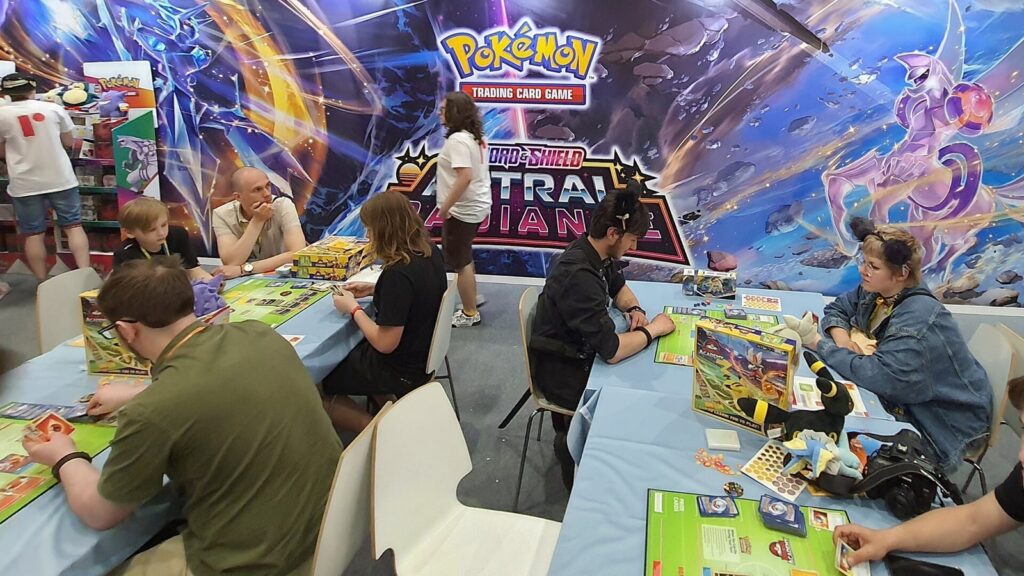

From 1990s nostalgia to a multi-billion dollar global market, Pokémon cards are now treated as collectible assets on par with watches and fine art.
The market for collectible Pokémon cards has reached significant financial dimensions thirty years after the franchise’s debut. According to data from the specialized platform Chase Society, the maximum estimated value of professionally certified cards considered tradable on the market could reach nearly $9 billion in total. The scope is international: from Japan, where the franchise was born, to the United States, which remains the most liquid market, to Europe, with the United Kingdom becoming a key hub for English-language cards. This phenomenon is also covered today by IlSole24ore, which has dedicated space to the subject.
The benchmark case is the sale in February of a 1998 Pikachu Illustrator sold for $16.5 million by the Goldin auction house, controlled by eBay, with the world record awarded to AJ Scaramucci, founder of the investment firm Solari Capital. This operation was followed by other transactions exceeding one million dollars, while in the first half of the year, Pokémon was the most searched term in eBay’s collectibles category. “This isn’t money someone spends just to play with friends,” observed Adam Ireland, eBay’s global head of collectibles.
On the intermediary side, the phenomenon has generated dedicated business models. Jordan Dunne, 34, a former data analyst at a Chester law firm, left his position in 2025 to focus on trading cards through his own company, Big Box Gaming. The company is expected to close the year with around £4 million in sales, compared to £1.2 million in 2025. During live streams on eBay, the British dealer manages to sell single cards for over £2,000 and claims to generate up to £60,000 in sales in just a few hours, using a model based on purchasing at specialized fairs and reselling online.
Two structural factors contribute to this growth. The first is the nostalgia of the generation that played with Pokémon in the nineties, now in their thirties and forties and often with sufficient income to purchase items from their childhood. The second is the scarcity of specimens surviving in optimal condition, given that a card printed twenty-five years ago cannot be replicated on the secondary market. Added to these are the franchise’s own relaunches: the 151 collection launched in 2023 dedicated to the series’ first 151 characters, the 2024 mobile version of the card game, and the thirtieth anniversary, which served as a further catalyst.
The impact of PSA certifications on valuations
Professional certification companies play a decisive role in market liquidity. The US-based PSA assigns each card a grade from 1 to 10 based on parameters such as scratches, edges, image centering, and other defects, significantly affecting the valuation. A version of Pikachu from the 2002 Legendary Collection has just 35 specimens with a PSA 10 rating, and the price differential is stark: approximately £250,000 in PSA 10 condition versus £15,000 with a PSA 9 rating. According to GemRate data, PSA processed over 1.3 million Pokémon cards in August alone, roughly ten times the volume of the same month in 2021, to the point that in May, the company suspended some requests for lower-value cards due to capacity limits.
The visibility of the phenomenon is also confirmed by attendance at industry fairs. Card Con Farnborough, a British event dedicated to trading cards, recorded approximately 10,000 visitors this year, double the previous edition, with buyers bringing thousands of pounds in cash and collectors who prefer to remain anonymous. The concentration of value in easily transportable objects has also attracted criminal activity: in August, a theft was recorded at the London store of Fanatics Collectibles, while in 2025, Manchester police seized a haul of stolen cards with an estimated value of £250,000.
On the operator side, speculation also extends to mid-range transactions. One dealer reported selling a Mario Pikachu for about £20,000 after purchasing it eight years earlier for £30. Dunne, for his part, claims to have sold three cards from his private collection for a total of about £300,000 over three weeks, after buying them a year earlier for about half that. As in any collectible asset market, past performance does not guarantee future results: valuation depends on demand, rarity, authenticity, state of preservation, and the ability to find a buyer willing to close the deal at the requested price.
A new life in video games and beyond
The Pokémon phenomenon, however, goes far beyond the collectible card market, having become a true mania. For years, Pikachu and his colleagues have also been found in video games, even entering the scope of esports; while most recently, in the past few months, they have even entered the world of pinball, with the latest creation from Stern Pinball dedicated specifically to Pokémon for the anniversary.
Photo: Klapi (CC BY-SA 4.0)