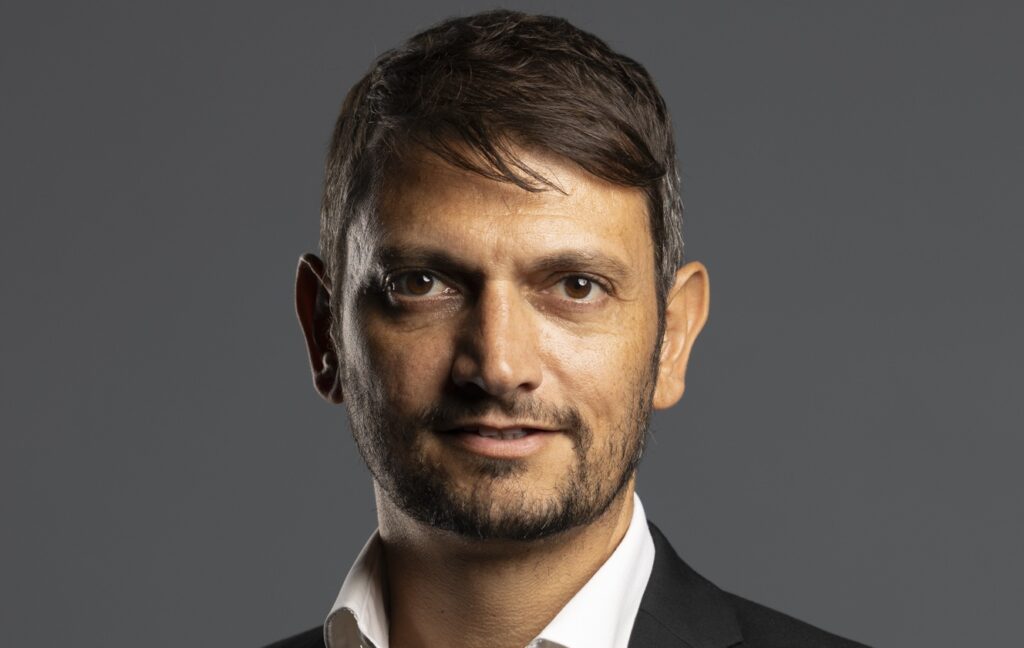

Heathcliff Farrugia, Chief International Relations Officer at SiGMA, outlines the vision for the upcoming event, scheduled in the Eternal City in November, 2nd – 5th.
The gaming industry will gather in the Eternal City, for the second edition of SiGMA Rome, taking place in November, from 2nd to 5th, at the Fiera di Roma. A wide range of topics will be the focus of these three very busy days, attracting operators, stakeholders, and experts from across the sector. Discussions will cover technology, artificial intelligence, and the international market, alongside in-depth analysis of the industry’s status in Italy, now that one cycle is coming to an end and a new year is coming. The slogan for this new edition, “Advancing Regulated Gaming,” embodies the vision and essence of an event that will turn Rome into the gaming capital for three days. We talk about it with Heathcliff Farrugia, Chief International Relations Officer at SiGMA.
“Advancing Regulated Gaming” is the slogan that best defines this second edition. What exactly does it represent for SiGMA, and what role do you assign yourselves within this context?
“For us, ‘Advancing Regulated Gaming’ is not merely a slogan, but a fundamental principle we firmly believe in. For a while, SiGMA is not only a platform for organizing events worldwide, but it is responsible for exploring the importance of regulation. Indeed, while we are not regulators, we strongly believe that structured regulation is essential for ensuring the sustainable growth of the entire industry. Often, even within European contexts, regulatory frameworks designed to channel gaming, end up achieving a “channelization” of modest levels like 40%. This means that in such cases the remaining 60% of the market continues to operate illegally and that the particular regulation is inadequate and merely formulated to “tick a bureaucratic box”, without generating a real impact. On the contrary, our goal is to promote effective regulation, able to protect the sector and lead it toward healthy and controlled growth.”
This edition marks a return of the event to Rome. What new features or adjustments have you introduced, compared to last year’s debut?
“A first edition always has a margin of uncertainty, but last year’s results exceeded our expectations, so the organisation decided to introduce a number of strategic improvements. In fact, if last year’s event was mainly set on an international audience, this time we wanted to place strong emphasis on the local context: thanks to our collaboration with SAPAR, we have also planned a three-day session entirely dedicated to the Italian market in the local language.
We want this summit to become firmly established in Rome, recognizing the importance of the host country, its culture, and its industrial fabric.”
How is the event structured, in terms of the organizational structure and its macro-areas?
“SiGMA was born in the iGaming sector and has continued to expand year after year, taking on an increasingly corporate dimension. The summit will be divided into macro-areas, which we call ‘verticals’; an area dedicated to affiliates, focused on marketing strategies and supported by a dedicated conference stage, and the AIBC section, focused on artificial intelligence and blockchain. In addition to these, there is a stage dedicated to the Italian market and a new one named ‘Fx,’ focused on the world of finance, digital assets, and the Mica (Markets in Crypto-Assets) license, which covers the European regulatory framework for cryptocurrencies. As the gaming industry moves toward this type of integration, we aim to ensure that cryptocurrency management also takes place within a regulated framework. Therefore, companies in the sector that wish to operate in this sphere, must be able to rely on providers and suppliers authorized and compliant with European Union standards.”
A highly topical issue concerns the reorganization of the sector in Italy and the relationship between physical and online channel. What SiGMA thinks about this discussion?
“This topic finds significant room in both general panel discussions and the Italian market landscape. Our position is clear: physical and online channel should not be viewed as opposing sectors, but they must converge, as they are now complementary to eachother. Indeed, bigger operators manage the entire user journey by offering comprehensive, 360-degree solutions, without necessarily distinguishing much between the two realities. In Italy, the regulatory process has seen the online sector progress, whilst the physical sector stalled, due to issues surrounding tender processes. In our view, that regulatory framework requires a updating. After all, looking at the most advanced international markets, we see the adoption of largely agnostic regulations, based on general principles applicable to both physical and digital operations, with the exception of necessary technical requirements specific to brick-and-mortar outlets. This said, every country has it own peculiarities.”
What reasons led to the decision to once again confirm the capital as venue of the event?
“The decision to confirm the Eternal City as the event venue is linked to its commercial positioning and international appeal. In comparative assessments of various major cities, Rome consistently ranked at the top of our metrics. The capital holds extraordinary appeal for international delegates, who approximately represent 85% of total participants. The combination of history and image heritage makes this location unique on the global landscape”
Regarding technological innovation, what are the key issues surrounding artificial intelligence?
“Artificial intelligence has been applied in the sector for some time, but its recent evolution demands even greater attention. Regulation often is dealing with a chase with technology, as the latter develops at a much faster rate. Without an internationally shared governance framework, there is a risk that the use of these technologies could get out of control. Our panels explore both the operational opportunities and the need to establish clear rules.”
From your international perspective, what is the outlook for the gaming industry in 2026?
“We organize summits in eight countries across five continents and we are seeing positive regulatory developments, with significant progress particularly in Latin America and Africa. We must acknowledge a fundamental fact: the demand for gaming services is a constant aspect that is here to stay. Attempting to suppress it through purely restrictive measures does not lead to a genuine reduction; it only risks driving that demand toward illegal channels.”
What is the main critical issue to monitor for the sector’s stability?
“In my view, the greatest risk stems from political manipulation. Ideological pressures or restrictive measures don’t necessarily impact the illegal market; they only harm the legal industry that operates in compliance with the rules.”
Finally, what path should be taken to ensure a bright future for the sector?
“It is very simple: regulation!”