
The 2026 Programmatic Document binds online gaming licensees to four mandatory themes and to a prevailing distribution on generalist media.
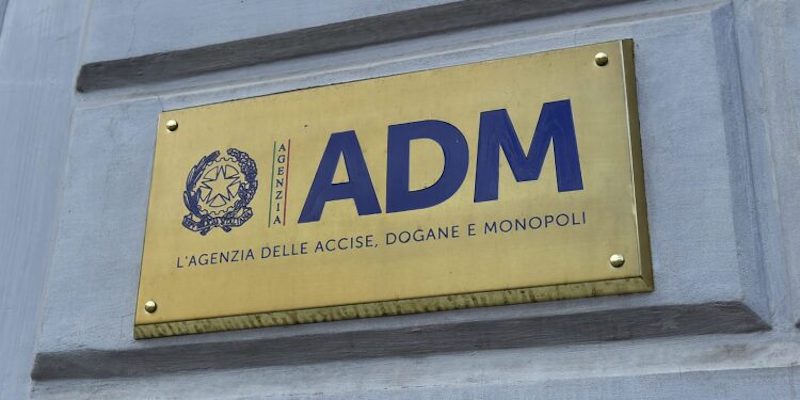
Financial management, gambling addiction, protection measures and risks associated with illegal gambling. These are the four macro-themes to which all responsible gaming communications carried out by online gaming licensees must mandatorily refer. This was established by the Government Commission set up last December 2025, through a document that has just been released and circulated by the Customs and Monopolies Agency (ADM), as provided for by current legislation, of which we had anticipated the publication on these pages, in the preceding weeks, and which was also discussed in recent hours during the event organized by the Fair Foundation on the same subject.
In particular, the Games Directorate of the Customs and Monopolies Agency, through the Online Gaming and Betting Office, has transmitted to the licensees for the operation and remote collection of games the Programmatic Document for 2026 responsible communication initiatives and information campaigns, the text of which was drafted by the Government Commission established pursuant to Article 15, paragraph 2, of the same decree and was received by the Games Directorate on September 30 from the Department for Information and Publishing of the Presidency of the Council of Ministers.
The obligation—as is known—stems from Article 15, paragraph 2, of Legislative Decree 41/2024, which requires online gaming licensees to allocate an annual sum equal to 0.2 percent of net revenues, and in any case not exceeding 1,000,000 euros per year, to the implementation of information campaigns or responsible communication initiatives on themes established each year by the Government Commission. The obligation became effective with the launch of the new concessions, from November 13, 2025: ADM concluded the awarding procedure provided for by Article 6 of the decree in 2025, awarding 52 concessions to 46 economic operators.
The Commission was established by decree on December 4, 2025 and was inaugurated at the Department for Information and Publishing, which chairs it through the Head of the Department. It includes five members designated respectively by the Ministers of Health, Education and Merit, the Interior, Economy and Finance, and the Minister for Sport and Youth. The document was prepared based on hearings held with ADM, the Higher Institute of Health and the Fair Foundation, having consulted the Permanent National Observatory on drugs, drug addiction, and other pathological addictions at the Presidency of the Council, reconstituted by DPCM of April 15, 2025, replacing the Observatory previously operating at the Ministry of Health.
According to the policy act, campaigns must be aimed at “promoting greater awareness of the risks associated with an unbalanced use of cash-win gaming, favoring informed and responsible behavior by citizens”, with a “preventive and educational” function also oriented towards spreading knowledge of self-limitation, self-exclusion, and control tools, as well as assistance and support channels.
The four mandatory themes of the campaigns
The themes on which licensees must develop initiatives are four: financial management, with particular reference to the risks associated with gambling; gambling addiction; potential and limits of protection measures; and risks associated with illegal gaming. On the first front, the document indicates a “direct and concrete language, built on verifiable statements,” with explicit examples such as “Gaming is not an investment,” “You cannot control the outcome of a play,” and “Chasing losses by playing more increases the risk.” Colors, images, and slogans that evoke winning, luck, or excitement are excluded, as are competitive or aspirational tones.
On the theme of addiction, campaigns must favor the early recognition of harm indicators and are aimed at players and their families, moving beyond narratives focused solely on individual responsibility. Regarding protection measures, the document adopts the technical-scientific opinion of the Observatory: limitation and self-exclusion tools reduce exposure to risk, but their effectiveness depends on the design and usage methods and does not eliminate the possibility of harm. On illegal gaming, the punitive profile of Article 4, paragraph 3, of Law no. 401 of December 13, 1989, is also recalled, which provides for criminal consequences even for those participating in unauthorized gaming circuits.
Media planning and reporting obligations
Paragraph 4 of the Programmatic Document prescribes “ensuring an adequate presence on mass communication media with generalist distribution, including national and local television, radio, and press, avoiding a prevailing concentration on channels characterized by algorithmic profiling or highly personalized consumption modes.” Hence the quantitative constraint: “the allocation of resources intended for paid distribution on social and digital channels must not exceed 35 percent of the overall campaign budget, without prejudice to the possibility of using the same channels for non-sponsored informational purposes.” The choice is motivated by the risk of more intense and repeated exposure of the most vulnerable subjects due to profiling mechanisms.
Paragraph 5 introduces the obligation of “annual transmission to the Department for Information and Publishing and to the Customs and Monopolies Agency of documentation that analytically illustrates the information campaigns and responsible communication initiatives carried out, with metrics relating not only to the expenditure incurred but also to the dissemination of the message (e.g., gross and net contacts where available, impressions, conversion rate),” also for the purposes “of analysis for the evaluation of the phenomenon and for the preparation of the Programmatic Document relating to the following year.”
The act is coordinated with the ban on advertising for cash-win gaming and betting provided for by Article 9 of Decree-Law no. 87 of July 12, 2018, converted with modifications by Law no. 96 of August 9, 2018, and refers to the AGCOM resolution 200/26/CONS, an act integrating the guidelines for communication campaigns against gambling disorders, which regulates principles for message setting, recipients and vulnerable categories, use of logos, links and QR codes, formats, and the use of testimonials and influencers. The Authority’s powers of supervision and enforcement regarding commercial communications and advertising remain unchanged. The document specifies that the investment obligation does not constitute a legitimizing title for initiatives that translate into a direct or indirect promotion of cash-win gaming, even through legal circuits.
The Programmatic Document is valid for one year from its publication on the institutional website of the Department for Information and Publishing and remains effective until the adoption of a new policy act; it constitutes the reference base for the years already elapsed (2025), for the current one (2026), and for the entire year 2027. The Online Gaming and Betting Office will shortly provide, with its own Directive, the operational indications for the implementation of Article 15, paragraph 2, of Legislative Decree 41/2024 according to the themes defined by the attachment. During the approval process, the Commission expressed the hope that the indications in the document will be followed in the future by all cash-win gambling licensees, and not only by those in online gaming.
At this point, therefore, to close the circle on gaming advertising, following the work of the Government Commission and the publication of the Guidelines by Agcom, the only thing remaining is the outcome of the consultation being launched by the Communications Guarantee Authority itself for the update of the previous 2019 Guidelines relating to other limitations and, in particular, on the management of odds and bonus comparisons and on the delicate topic of Infotainment.
Photo: Gn Media archive